Khaliji Dance in Dubai: The Gulf’s Traditional Folk Dance Explained
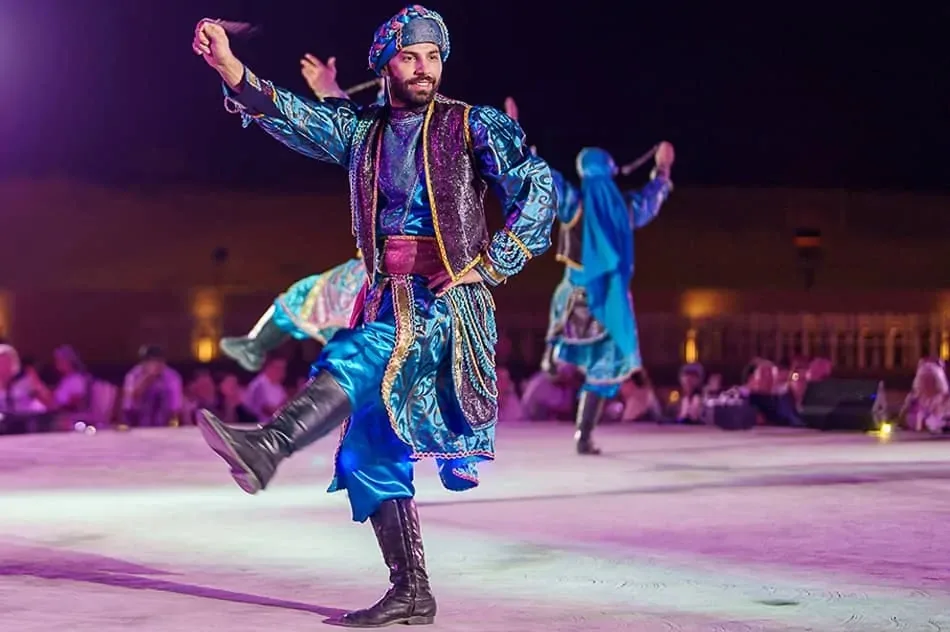
Of all the performances at our desert camp, one belongs most closely to this land: the Khaliji dance. Performed at weddings and celebrations across the Gulf for generations, it is a living expression of regional identity — flowing robes, swaying hair and the deep beat of traditional drums. Here is what makes it special and how to see Khaliji dance in Dubai.
What Does “Khaliji” Mean?
Khaliji means “of the Gulf” — from Khaleej, the Arabic word for the Gulf. The dance is shared by the UAE, Saudi Arabia, Kuwait, Bahrain, Qatar and Oman, with small local variations in each.
The Signature Movements
- Hair tossing (na’ashat) — women swing long hair from side to side in rhythm, the dance’s most recognisable movement.
- Flowing robes — the embroidered thobe al-nashal is held and swayed to frame the dancer.
- Subtle footwork and shoulder movements that follow the drumbeat.
The Music
Khaliji rhythm is built on traditional drums such as the tabl and the duff (a frame drum), often accompanied by the oud and rhythmic hand-clapping. The beat is distinctive, swinging and instantly recognisable across the region.
Roots in the Sea and the Desert
Before oil, life in the Gulf revolved around pearl diving, fishing, trade and desert herding. Many Khaliji songs and dances carry echoes of that life — the long months at sea, the joy of the divers’ return, and celebrations in the desert. Watching the dance is a glimpse into the Gulf’s history before the skyscrapers.
Khaliji vs Belly Dance
Both are performed at our camp, but they are very different. Belly dance (raqs sharqi) comes from Egypt and the wider Middle East and focuses on hip and torso isolations. Khaliji is the folk dance of the Gulf, centred on hair, robes and rhythm — more communal and celebratory.
Seeing Khaliji Dance on Safari
The Khaliji performance is part of our evening entertainment programme, along with the Tanoura show and the fire show. It is included on:
Etiquette for Guests
- Photos and videos are welcome — please avoid flash.
- Clap along to the rhythm; it is part of the tradition.
- Respect the performers and the cultural meaning of the dance.
Make It a Cultural Evening
Combine the Khaliji performance with other Emirati traditions at camp: henna and Arabic dress-up, a falcon photo and a traditional camel ride.
Book Your Desert Safari
See the Khaliji dance live under the desert stars. Compare our safari packages or book through the booking form — we confirm in writing within 2 hours.
Frequently Asked Questions
What is Khaliji dance?
Khaliji is the traditional folk dance of the Arabian Gulf countries, including the UAE, Saudi Arabia, Kuwait, Bahrain, Qatar and Oman. It is known for graceful hair-tossing movements and the rhythm of traditional drums.
What does Khaliji mean?
"Khaliji" means "of the Gulf" in Arabic (from "Khaleej", the Gulf).
Where can I see Khaliji dance in Dubai?
The Khaliji dance is one of the four live performances on our desert safari evening programme, alongside belly dance, Tanoura and the fire show.
What instruments are used in Khaliji music?
Traditional drums such as the tabl and duff, often with oud and clapping, create the distinctive Khaliji rhythm.