Evening Desert Safari
Best Seller

Evening Desert Safari

7 hours
👥100 People
📍Dubai, Sharjah, Ajman
💰 AED 150 AED 130 per person

Overview

Evening Desert Safari Dubai

Seven Hours That Will Change How You See This City

You have probably stood at the window of a skyscraper in Dubai and looked south. Past the marina, past the last ring of suburbs, past the highway, the land changes. The concrete stops. The sand begins. And somewhere out there, around 45 kilometres from where you are standing, the red dunes of Al Lahbab are waiting.

The Evening Desert Safari is how most people finally make it out there. It is Dubai’s most booked experience for a reason that has nothing to do with marketing — it is genuinely one of the best evenings you can have in the UAE. Adrenaline, culture, food, music, silence, and a sky full of stars that the city never lets you see. All in six hours. All for AED 150 per person, including hotel pickup from anywhere in Dubai.

This page covers everything: what happens, when, what to expect from the dunes, what the camp is actually like, and how to book. Read all of it, or skip to the section you need.


What Is an Evening Desert Safari — And Why Does Everyone Do It?

The evening desert safari is a structured itinerary that starts at your hotel in the mid-afternoon and delivers you, six hours later, back to the same lobby with sand in your shoes, a full stomach, and a phone full of photographs that no Dubai skyline shot will compete with.

It works because of timing. The afternoon departure catches the dunes during the late-day light, when the shadows across the ridge lines are at their longest and the red sand glows warmest. The camp activities fill the hours between dusk and dark. Dinner and entertainment run through the cool of the evening, when the temperature drops to something genuinely comfortable. And the drive home gives you time to sit quietly and process what just happened.

There are cheaper desert safaris in Dubai. There are also more expensive ones. The Evening Desert Safari at Desert Safari VIP sits at AED 150 per person not because it cuts corners, but because it covers everything that makes the experience worth doing without adding padding that raises the price without raising the quality. Hotel pickup, proper dune bashing, a real camp dinner, four live performances. That is the whole evening. Nothing hidden.


The Al Lahbab Red Dunes — Why Location Changes Everything

Not all desert safaris go to the same desert. Some operators run their sessions on dunes 20 kilometres from the city — close, convenient, and significantly less dramatic than the terrain further south. The photographs look similar. The experience does not.

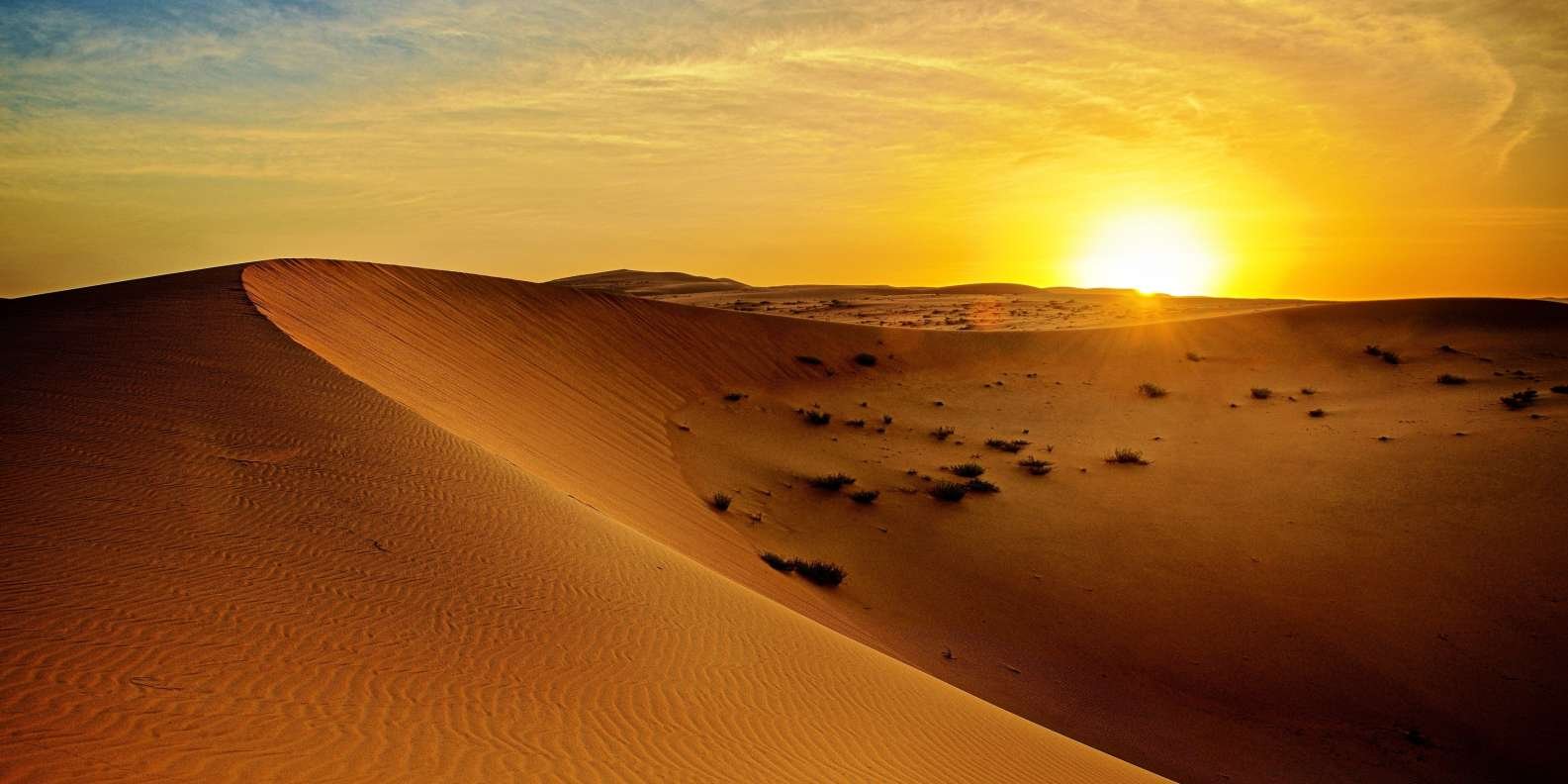
Desert Safari VIP operates every Evening Desert Safari in the Al Lahbab desert area, roughly 45 kilometres south of central Dubai. This is the zone that earned the nickname the Red Dune Belt — the iron content in the sand gives it a terracotta warmth that shifts from orange to deep amber in the late afternoon, and from amber to something closer to burgundy as the sun drops. The dune structures here are also taller and more complex than anything closer to the city. Some crests reach 90 metres. The ridge lines are sharper, the valleys between them deeper, and the driving routes genuinely varied rather than the same oval loop repeated four times.

The village of Lahbab, a few kilometres from the dune field, has been inhabited by Bedouin families for generations. The dunes around it are not a constructed attraction — they are the landscape these families have lived alongside, crossed on camelback, and navigated by starlight for centuries. Driving through them in a Land Cruiser feels different when you know that. It should.

Who the Evening Desert Safari Is Designed For

First-Time Visitors to Dubai

If you have one evening spare in Dubai and you want to do something that tells you something real about where you are — as opposed to another mall or another rooftop bar — this is the evening to spend. The desert is what came before the city, and it is what will still be here after. An evening in it provides context that no skyline view or museum visit quite manages.

Families with Children

Children aged four and above can participate in the full dune bashing session. Drivers adjust the intensity based on the ages present in the vehicle — and they have been doing this long enough to read the room within about 30 seconds of meeting your group. Children under four are welcome at the camp and can join the camel ride and sandboarding. The evening entertainment programme — particularly the Tanoura show and the fire performance — holds the attention of most children very effectively.

The BBQ buffet consistently includes familiar, plain options alongside the Arabic dishes. There is always rice, always grilled chicken, always something that an eight-year-old who refuses to try new things will eat.

Couples and Anniversary Trips

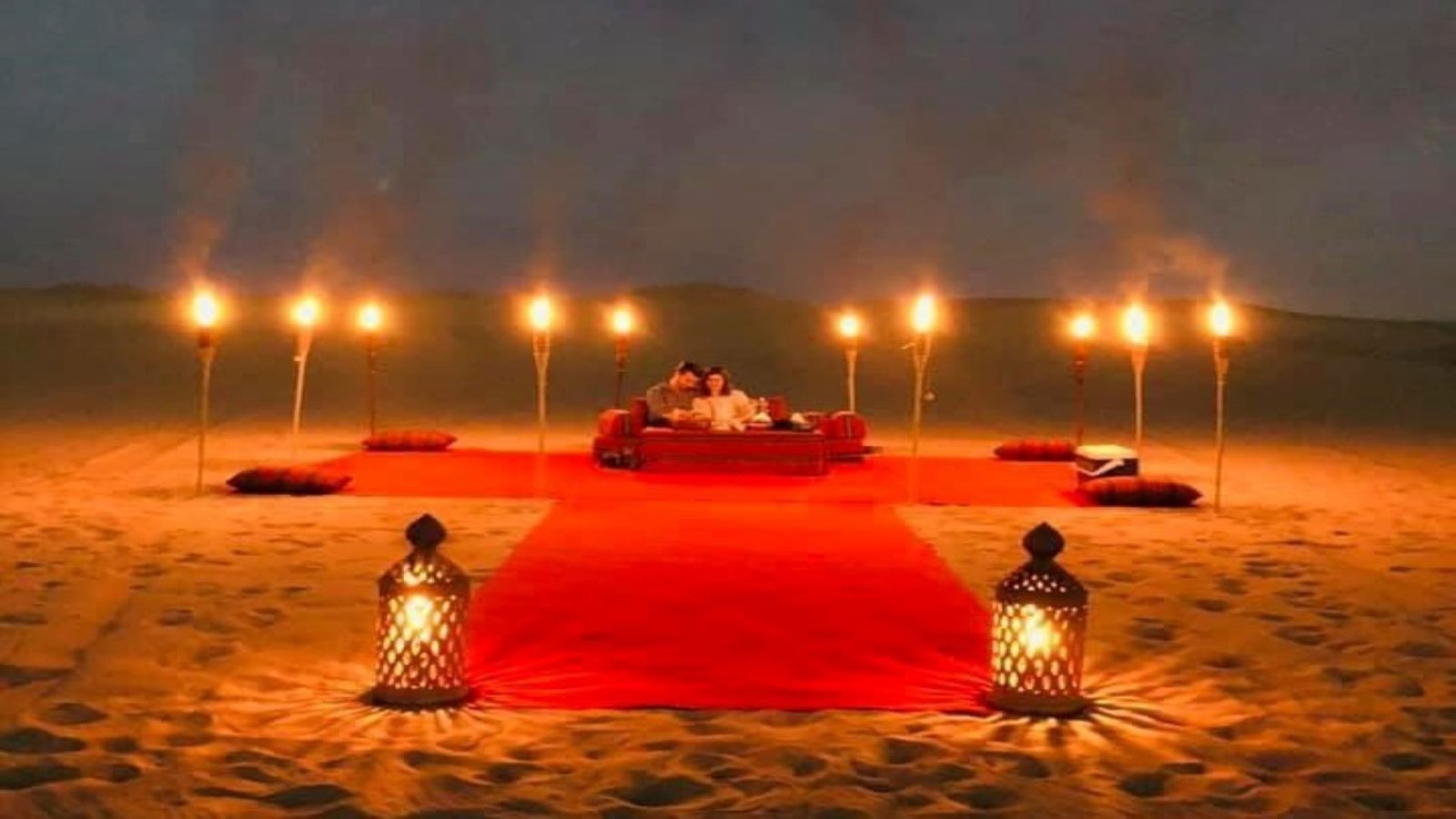
The Evening Desert Safari is not specifically a romantic package — but the sunset stop, the starlit dinner, and the Tanoura show in the dark create conditions that are difficult to manufacture in a city. If you are visiting for a birthday, anniversary or honeymoon, tell us at the time of booking and we can arrange a small decoration at the camp table. This costs nothing and takes two minutes to organise.

Groups and Corporate Outings

The Evening Desert Safari handles groups of up to six per vehicle and multiple vehicles for larger parties. For corporate bookings, we can arrange coordinated vehicles, a dedicated group host at the camp, and — for parties of 20 or more — a reserved seating section. Contact us directly for group pricing.


Is the Evening Desert Safari Safe?

Yes. The question comes up in almost every pre-booking conversation, and the honest answer is that dune bashing — when conducted by a certified, experienced driver in a maintained vehicle — carries a risk profile similar to riding a fairground attraction. The vehicle does not go as fast as it feels from inside. The driver knows every ridge on the route. The tyres are deflated before every single session without exception.

All Desert Safari VIP drivers hold a current UAE desert driving certification and carry a minimum of five years of active dune experience. Every vehicle is serviced monthly and checked before each departure. Every vehicle also carries a first aid kit, fire extinguisher, tow rope, sand recovery ladders, and a satellite communication device.


⚠️  PLEASE INFORM US AT BOOKING IF ANY OF THE FOLLOWING APPLY
  • Pregnant guests — dune bashing is not recommended; all camp activities remain fully accessible
  • Back, neck or spinal conditions — a gentler driving option is available on request
  • Active cardiac conditions or recent heart surgery
  • Severe motion sickness — medication plus a gentler route are available
  • Children under 4 — welcome at camp, advised to skip the dune bashing session


When to Go — Seasonal Guide for the Evening Desert Safari

Season What to Expect
October – April (peak) Ideal conditions. Temperatures 18–30°C. Clear skies. Sunset timing creates extraordinary golden-hour light on the dunes. Book as early as possible — this is high season.
May – June Warming but still manageable in the late afternoon and evening. Less crowded than winter months. Good visibility and slightly shorter sunset shadows.
July – September (summer) Hot during the day (40°C+), but evening temperatures at camp are workable, often aided by breeze. Sessions depart slightly later to allow daytime heat to ease. Significantly fewer tourists.
November – February (best) Peak of peak season. Perfect evenings. The desert at night can feel genuinely cold — bring a light layer. Sunsets are at their most dramatic during these months.


What to Wear and How to Prepare

Clothing

  • Long trousers over shorts — sand gets into everything, and trousers keep it off your skin during the ride
  • Light top — breathable cotton or linen; layers work well as it cools off significantly after sunset
  • Closed shoes or solid sandals — flip flops are not suitable for sandboarding and become uncomfortable when filled with sand
  • Light jacket or shawl — the desert temperature can drop 10–15 degrees after the sun goes down, especially in winter

What to Bring

  • Fully charged phone or camera — the sunset stop is the most-photographed moment of any Dubai trip
  • Sunglasses — for the drive to the dunes and the golden-hour stop
  • Motion sickness medication — if relevant, take it at least 30 minutes before departure, not after symptoms start
  • Small amount of cash — for any add-on activities or shisha at the camp; most add-ons can also be pre-booked

What Not to Bring

  • Valuables that cannot handle vibration, sand or the occasional bump
  • Heeled shoes of any kind
  • Large bags — the vehicle has limited space and you will not need most of what you pack

What to Eat Beforehand

Keep it light for at least two hours before departure. A heavy meal before dune bashing is a reliable route to discomfort. The buffet dinner at the camp will more than compensate for any afternoon restraint.

Tour Highlights

Duration 6 to 7 hours (approx. 3:00 PM to 10:00 PM)
Departure 3:00 PM – 3:30 PM daily — hotel pickup included
Price AED 150 per person — all-inclusive
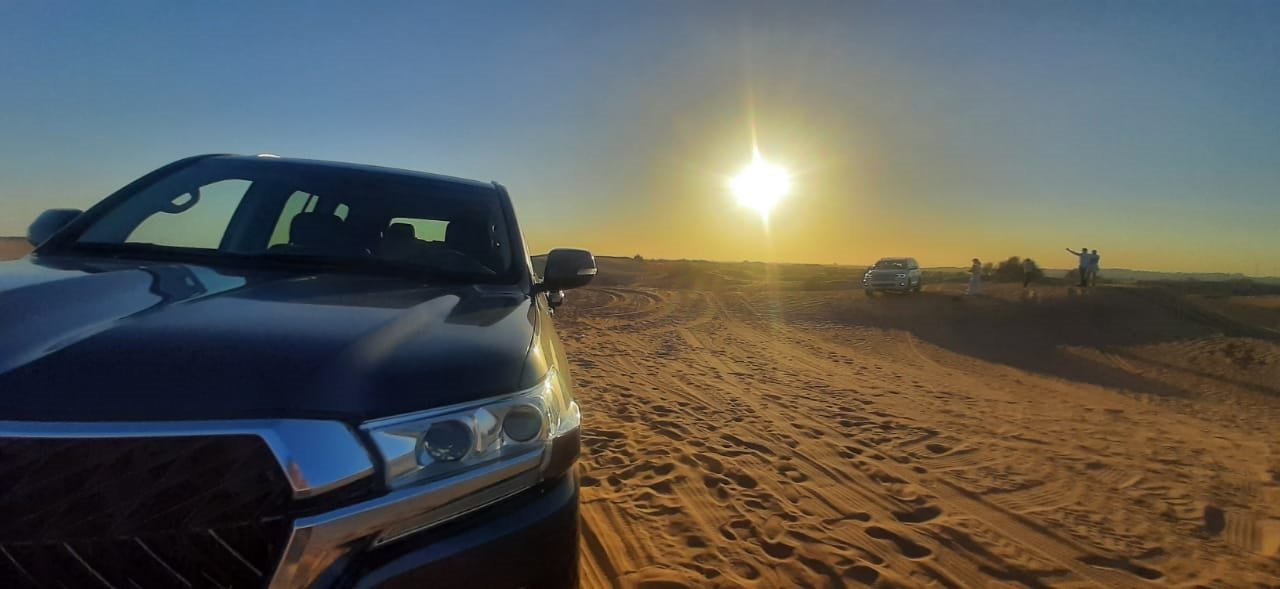
Vehicle Toyota Land Cruiser 200 Series (4x4, shared)
Dune Bashing 30 minutes — professional certified driver
Location Al Lahbab Red Dunes — 45 km south of Dubai
Min. Age 4 years (gentler ride available for young children)
Group Size Up to 6 passengers per vehicle
Camp Setup Traditional Bedouin-style desert camp
BBQ Dinner Full buffet — vegetarian and non-vegetarian
Entertainment Belly dance, Tanoura, Fire show, Khaliji dance
Return Drop-off Hotel delivery approx. 9:30–10:00 PM

Tour Itinerary

3:00 PM

Hotel Pickup

Your driver arrives at the lobby within the 3:00–3:30 PM window. You will get a WhatsApp message the evening before with the exact pickup time for your hotel and your driver's contact number. The vehicle is a Toyota Land Cruiser — air-conditioned, clean, and carrying no more than six passengers. The drive south takes around 45 minutes on the Emirates Road.

4:00 PM

Tyre Deflation and Briefing

Before entering the dune field, the vehicle stops at a fixed point where tyre pressure is reduced from road pressure (around 35 PSI) to dune pressure (15–17 PSI). This is not optional and is not skipped. It spreads the tyre's footprint across more sand surface, which is what makes the difference between a controlled, thrilling ride and a vehicle that gets stuck. Your driver gives a brief safety talk while this happens. Two minutes, practical, not theatrical

4:15 PM

Dune Bashing

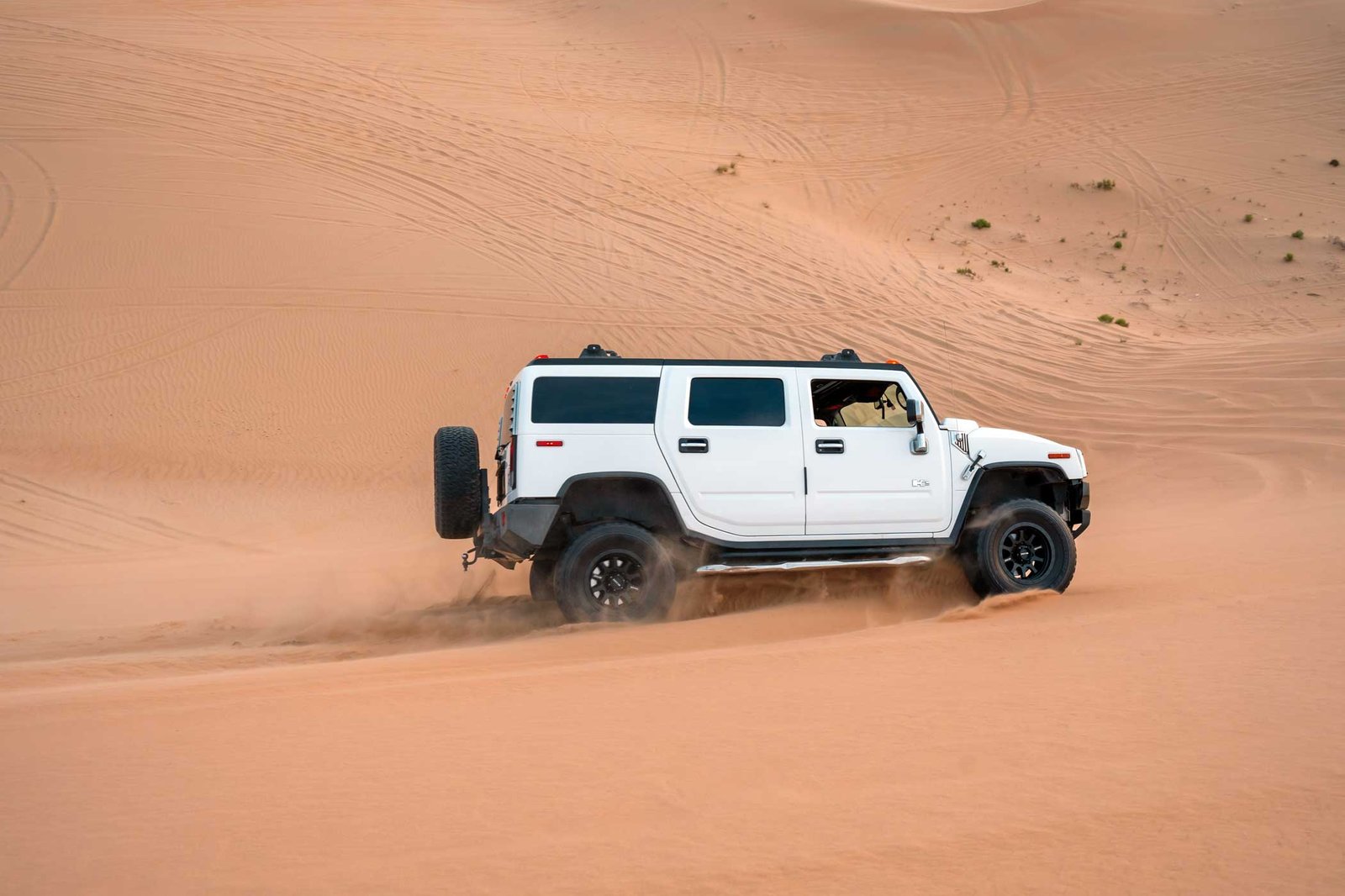
The session begins on the outer ridge of the dune field. Your driver has been navigating this terrain for years and reads the sand condition before every run — the surface is different every afternoon depending on wind and temperature, and a good driver adjusts the route accordingly. The session covers a genuine circuit: open flats, climbing traverses across ridge faces, and the drops that make the front of the car disappear from view and produce the moment that everybody screams and then immediately asks to do again. Thirty minutes in a well-driven Land Cruiser on these dunes is substantially more than enough for most guests. It is long enough to cover real terrain, short enough that nobody is feeling unwell by the end. If you are prone to motion sickness, sit in the middle seat rather than the very back, keep your eyes on the horizon, and tell your driver before the session starts — they can run a gentler version of the route that still covers the same landscape

4:50 PM

Sunset Photography Stop

The driver parks on the crest of a high dune while there is still light. This stop is timed to catch the 20–25 minutes before the sun reaches the horizon — the window when the desert light is doing what it does in no other landscape in the world. The shadows across the dune faces create natural geometry. The red sand takes on its deepest colour. Even guests who describe themselves as bad photographers get photographs they send to people back home. The stop is unstructured. No one is organising you into poses. You can climb the dune, sit at the crest, walk around. The driver stays with the vehicle. This is yours.

5:20 PM

Drive to the Bedouin Camp

A 15-minute drive across flatter desert terrain brings you to the camp. First impression on arrival: it is larger than most guests expect. The camp holds multiple groups simultaneously but is laid out to prevent it feeling crowded. Seating areas are separated by low barriers, lanterns, and the natural layout of the site.

5:30 PM

Camp Activities

This is the open-structured part of the evening. The activities are available but not queued or time-slotted. You do what you want, when you want, at whatever pace your group sets.

Camel ride

a guided walk on camelback across a short section of open sand. The animal kneels for you to mount, stands up (front legs first — brace yourself), and walks a relaxed circuit. It takes 10–15 minutes and produces photographs that look nothing like your actual height.

Sandboarding

a smooth board and a sand slope. You can sit or stand. Most people start sitting, try standing on the third or fourth run, and succeed on the fifth. It is easier than it looks once you commit to leaning forward

Henna painting

traditional Arabic hand art applied by an artist at the camp. The designs are offered at no additional charge and last one to two weeks depending on how much your hands contact water

Arabic dress-up photography

thobes, ghutra, abayas and bisht available for photographs. The camp team will take pictures for you

Arabic coffee and dates

served continuously from a brass dallah throughout the camp period. The coffee is cardamom-spiced and unsweetened. The dates are Medjool. Together they are the correct way to start an evening in the desert

Falconry photograph

a trained falcon perched on a gloved hand. The birds are calm, managed by a trained mahout, and genuinely impressive up close

7:00 PM

BBQ Dinner Buffet

The buffet opens at approximately 7:00 PM and runs for 90 minutes. The food is prepared at the camp kitchen, not pre-packaged and reheated. The range covers both directions of dietary requirement without shortchanging either. Soft drinks, fresh juice, water, and Arabic coffee are unlimited throughout dinner. Alcohol is not served at the camp — this is standard across all desert safari camps in the UAE in accordance with local norms

7:30 PM

Live Entertainment

Belly Dance

A professional Oriental belly dance performance. The choreography uses live music playback and runs for approximately 20 minutes. Audience participation is invited — not pressured. Some guests join the floor. Some photograph from their seats. The performance is the genuine art form, not a simplified tourist version of it.

Tanoura Whirling Show

The Tanoura comes from Egyptian Sufi tradition and centres on one performer who enters a state of continuous spinning. He wears layered skirts — typically in concentric rings of colour — that fan out into a rotating disc as the speed builds. The performance lasts around 15 minutes. Most guests photograph it constantly and still cannot quite believe what they are watching by the end.

Fire Show

After dark, a fire performer takes the main stage with poi, fire staffs, and a choreographed sequence that uses the surrounding darkness as part of the design. The heat is palpable from the seating area. The light moves faster than you expect. It is the performance most guests mention first when describing the evening to someone who wasn't there.

Khaliji Folk Dance

The closing performance draws on the pearl-diving heritage of the Arabian Gulf. The music is built on the tabl and duff frame drums, the clothing is the traditional bisht and thobe, and the defining movement is the characteristic forward lean and hair-swinging motion of the Khaliji style. It is the most culturally specific thing on the programme and, in many ways, the most moving — partly because it is the least expected

9:15

Return to Dubai

The vehicle leaves the camp at approximately 9:15 PM. Most hotels in Dubai receive guests back between 9:30 and 10:00 PM depending on location. The drive is quiet. The desert on either side of the highway is very dark. Most people sit with their phones or with their thoughts. Both are appropriate

What's Included

✅ Included

  • Return hotel transfers — Dubai, Sharjah, Ajman
  • 30 minutes of professional dune bashing
  • Sunset photography stop at a high dune crest
  • Camel ride at the camp
  • Sandboarding on the dune slope
  • Henna art and Arabic dress photography
  • Arabic coffee, dates and welcome refreshments
  • Full BBQ dinner buffet — veg & non-veg
  • Unlimited soft drinks, juice and water
  • Four live shows: belly dance, Tanoura, fire, Khaliji
  • Falconry photograph at camp

❌ Not Included

  • Alcoholic beverages
  • Quad bike (add-on: AED 100/30 min)
  • Extended camel safari (add-on: AED 80)
  • Personal travel insurance
  • Shisha (add-on at camp)
  • Gratuities (discretionary)

Frequently Asked Questions

Get Enquiry